Industrial space around Flagstaff is spread out: distribution buildings near Bellemont, shops and storage in east Flagstaff, and businesses around the airport and along the I-40 corridor. What they share is a climate that is hard on concrete. Trucks bring snow and deicer into receiving areas, buildings are often only partly heated, and dock doors open to freezing air all winter.
A coating program addresses the problems that cost facilities money every day: dust settling on product, worn drive lanes, broken joints that jolt forklifts and faded safety lines. This page explains how we approach industrial floors here and how we keep your operation running while we work.
Facilities we work in
The cold-building problem
Many industrial buildings in the area are heated only to working comfort, or not at all in storage areas. In winter, slab temperatures can sit near or below freezing, and dock doors bring in waves of cold air every time a truck arrives.
That affects coatings in two ways. During installation, cold slabs slow curing and can push conditions toward the dew point, where moisture condenses on the surface. After installation, big temperature swings at docks and doors stress rigid coatings and joint fillers.
We plan around both: scheduling installs for workable conditions, using temporary heat where needed, choosing cold-tolerant systems for docks and using flexible materials where movement is greatest.

What a coated industrial floor gives you
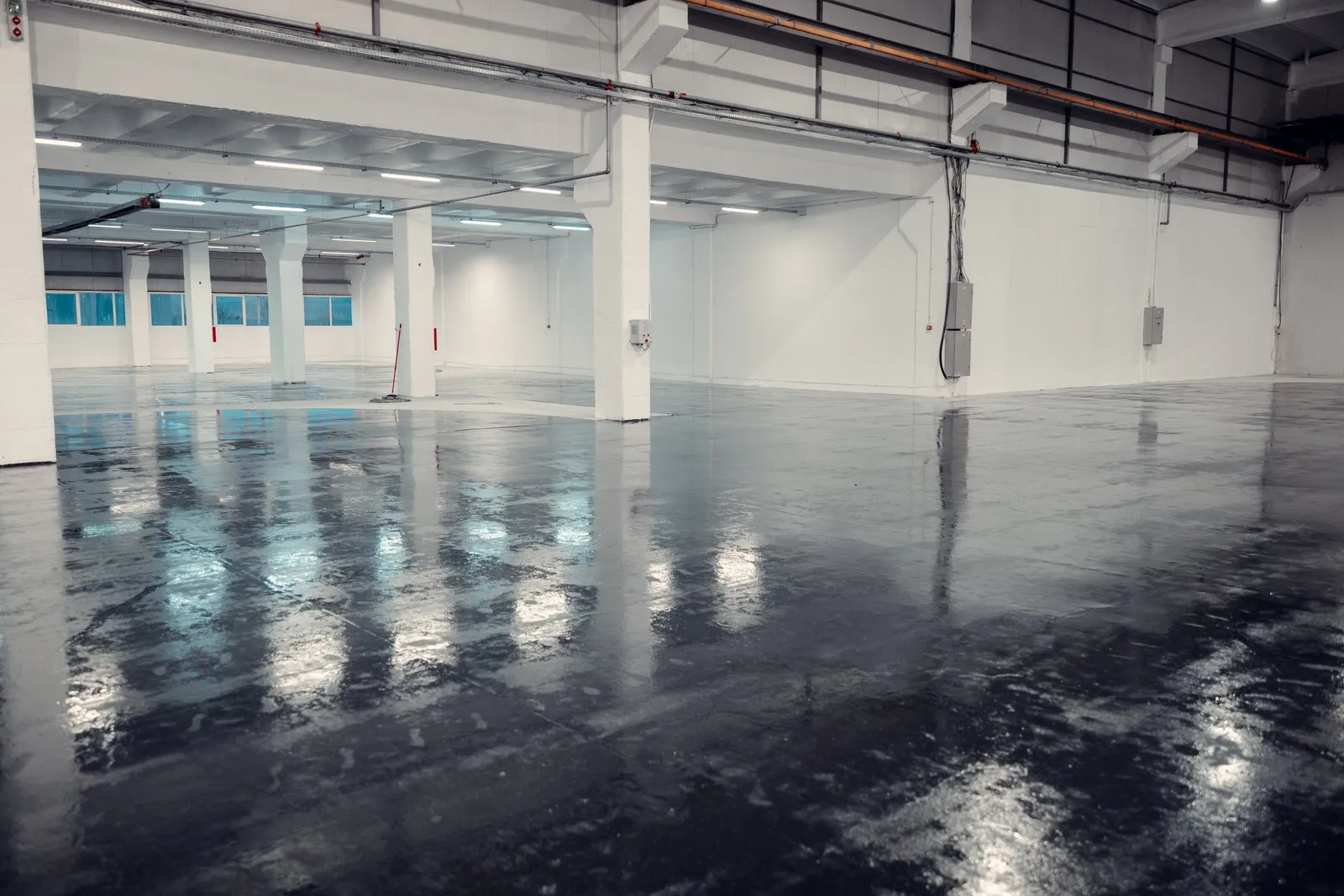
Dust stops at the source. Uncoated concrete slowly wears under forklift tires, releasing fine dust onto inventory, machinery and filters. A sealed floor ends that.
Brighter, safer aisles. Light coatings reflect overhead light, which helps visibility on short winter days.
Wear resistance. High-build systems take the abrasion that would otherwise erode drive lanes and turning areas.
Easy cleanup. Meltwater, deicer residue, hydraulic fluid and oil stay on the surface where they can be scrubbed up.
Organized space. Bonded striping and color zones make traffic routes, storage areas and hazards obvious.
Systems for industrial floors
We match the system to traffic, chemicals and temperature rather than defaulting to the heaviest option.
High-build epoxy
Thick, hard-wearing layers for heated warehouses and manufacturing floors under forklift traffic.
Polyurea systems
Flexible and impact tolerant, suited to docks, unheated areas and shops. See polyurea coatings.
Urethane cement
For washdown, heat and chemical exposure in demanding process areas.
Densify and seal
Cost-effective dust control for low-traffic storage when a full coating is not needed.
Joints and dock edges
Joints are where industrial floors fail first, and in cold buildings they move more. Hard forklift wheels chip the edges of open joints, turning them into ruts. Before coating, we clean out joints, rebuild damaged edges and fill them with semi-rigid filler suited to forklift traffic. At dock edges and door thresholds, where temperature swings are largest, we pay extra attention to materials and detailing.
Striping, zones and safety markings
Clear floor markings are one of the most effective safety improvements in any facility. We lay out and coat:
- Forklift lanes and pedestrian walkways
- Racking and staging zones
- Keep-clear areas at panels, exits and eyewash stations
- Charging and parking areas for equipment
- Color-coded receiving, storage and shipping zones
Coated lines are bonded into the floor system and last far longer than paint or tape, especially where snowmelt and deicer would quickly wear paint away.
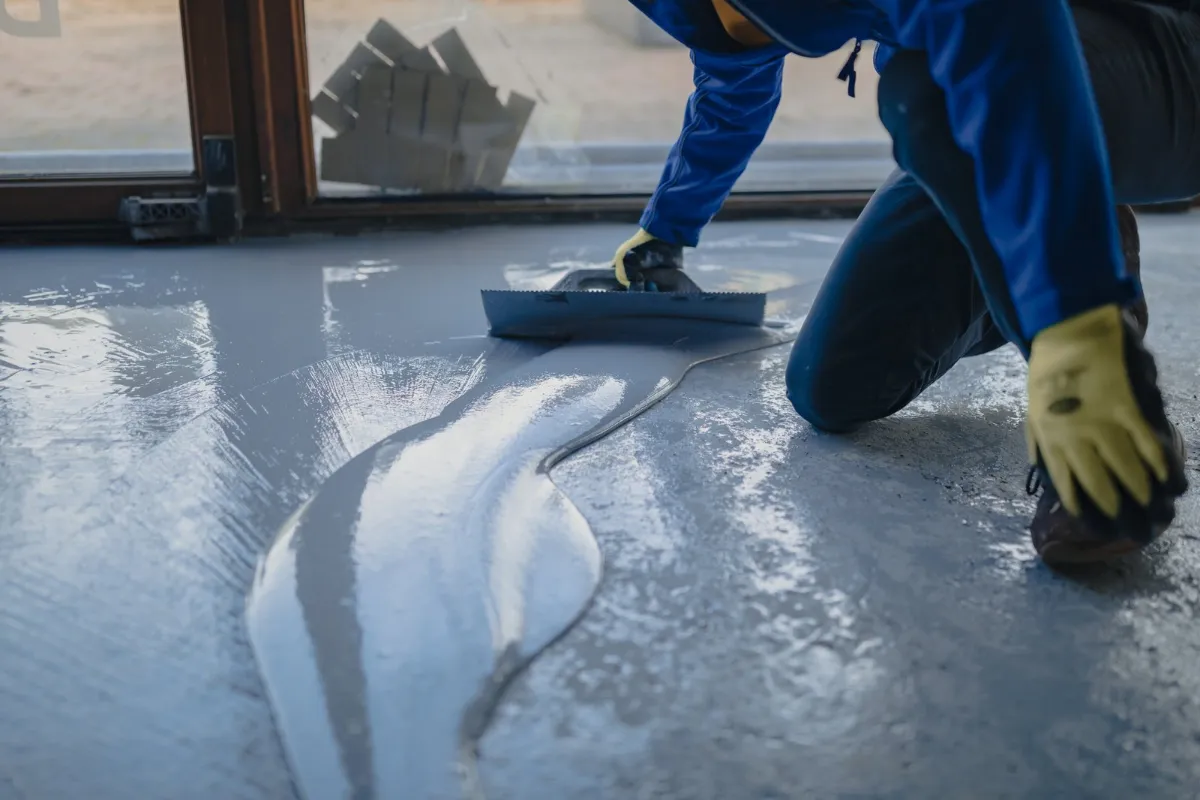
How we coat a working facility
Facility walk
We assess slab condition, joints, moisture, temperatures, chemicals and traffic, and review your operating schedule.
Phased plan
Sections are scheduled so operations continue, often around racking and shifts.
Preparation
Large grinders with dust collection, joint rebuilding and repairs.
Coating
System layers applied section by section, with conditions monitored throughout.
Striping and handover
Markings coated in, then a walkthrough with cure times and maintenance guidance.

Industrial work in Northern Arizona
Distances are longer and weather windows tighter here than in the Valley. We plan materials, equipment and crews so that once a project starts, it moves efficiently, and we build weather contingency into schedules for winter work.
Receiving areas deserve special attention. Snow and slush falling off trucks and trailers bring deicer chemicals inside, where they attack bare concrete. A coated dock area with appropriate texture keeps that damage at bay and gives workers better footing.
Cost, maintenance and why a specialist matters
Industrial pricing depends on slab condition, system thickness, joint work, access around racking, phasing and striping. We itemize all of it so you can see where the budget goes and decide where heavier systems make sense, such as drive lanes and docks, and where lighter ones will do.
Maintenance is straightforward: auto-scrubbers with neutral cleaners, walk-off areas at docks and a yearly check of high-wear lanes. Catching thin spots early means a quick recoat rather than a repair.
Industrial floors are large, often contaminated and always busy. Working on them well takes heavy equipment, product knowledge and careful planning, and a failure in a working warehouse costs far more than the floor itself.
Choosing colors for an industrial floor
On an industrial floor, color is a safety and lighting decision first. Light greys and tans reflect the most light and make spills easy to spot, which helps on short winter days when natural light is limited. Mid greys hide tire marks between scrubbings. Very dark floors absorb light and show the pale dust that blows in from the docks.
Many of the facilities we coat settle on a pale grey base, high-visibility yellow for forklift routes and two or three accent colors to mark receiving, quarantine and shipping. Bring your safety lead to the walk-through and we will sketch a layout together.
Signs your facility floor needs attention
If several of these sound familiar, a coating program will likely pay for itself in cleaning time, product protection and safety.
Phasing around inventory and racking
Few facilities can empty out completely, so most industrial projects are phased. We map the building into sections, agree on the order with your operations lead and plan how product and racking will move as each area is prepared and coated. Fast-cure systems shorten the time any one section is out of service, and temporary barriers keep traffic away from fresh coatings.
The goal is that your team always knows which aisles are open, where to stage incoming loads and when each section will be handed back.