Every coating has a temperature range it likes. Traditional epoxies are happiest in a warm, stable room, and they can take a long time to cure when the slab is cold. In a town where frost can show up in September and linger into May, that narrows the window for good floor work.
Polyaspartic coatings change the math. They are a type of aliphatic polyurea designed to cure quickly and at lower temperatures, and they hold their color under strong sunlight. For Flagstaff homeowners, that means more flexible scheduling, less time without the garage, and a topcoat that does not fade where the sun comes through the door. Here is how they work and where we use them.
Why cure temperature matters so much here
Coatings cure through a chemical reaction, and like most reactions it slows down in the cold. A standard epoxy on a chilly slab can stay soft and tacky for a long time, pick up dust and fail to reach full hardness. Worse, if the slab is close to the dew point, moisture can condense on the surface and interfere with the bond.
Polyaspartics react much faster and remain workable at lower temperatures. That means we can coat a garage on a crisp October day, or in a heated garage in January, and have it hard enough to use within a day or two.
There are still limits. Every product has a minimum application temperature, and slabs in unheated garages can be colder than the air above them. We measure both and plan accordingly.
The chemistry in plain language
Polyaspartic coatings are a branch of the polyurea family, engineered to cure in hours rather than days while giving installers a little more working time than pure polyurea. They are aliphatic, which means they do not yellow in sunlight the way standard aromatic epoxies do.
In floor systems, polyaspartic is most often the clear topcoat over a flake or color layer. It can also be used as the base coat in some systems, creating a floor that is entirely fast-curing. Either way, it provides a hard, glossy or satin surface that resists abrasion, chemicals and UV.
The trade-off is that fast cure means a short pot life. Once mixed, the material has to be applied quickly and evenly. That is part of why it is a professional product.
Polyaspartic compared with traditional epoxy
Both have their place, and many of our best floors use both. Here is how they compare for Flagstaff conditions.
| Traditional epoxy | Polyaspartic | |
|---|---|---|
| Cure in cool weather | Slow; may stay soft on a cold slab | Fast; works at lower temperatures |
| Return to service | Typically several days for vehicles | Often one to two days for vehicles |
| UV and color | Can yellow in direct sun | Color stable in sun |
| Working time | Longer, more forgiving | Short; needs an experienced crew |
| Typical role | Base and build layers, metallic work | Topcoat, fast-cure full systems |
A common Flagstaff build is a flexible polyurea base, a flake broadcast and a slip-resistant polyaspartic topcoat. It combines a strong, flexible bond with a fast, sun-proof finish.
How we use polyaspartic
Garage flake system
Base coat, full flake broadcast and a textured polyaspartic topcoat. Our go-to for garages that need to be back in use quickly.
Shoulder-season installs
Fall and spring projects when nights are cold but days are workable. Fast cure lets us finish before temperatures drop.
Covered porches and entries
UV-stable, textured coatings for porches that catch afternoon sun and wet boots.
Commercial quick turns
Shops, offices and restaurants that need to reopen within a day.
What you gain with a polyaspartic floor
Installation process
Temperature and moisture checks
We measure slab temperature, air temperature, humidity and moisture in the concrete.
Diamond grinding and repair
Fast-curing coatings need a properly profiled surface. We never skip grinding.
Base and decorative layers
Base coat with flake or color, applied in sections sized to the material’s working time.
Polyaspartic topcoat
A clear topcoat applied with a wet edge, with anti-slip aggregate where needed.
Back in service
Socks and shoes the same evening in most conditions; the car goes back in once we confirm hardness, often the next day or the one after.
Altitude, sun and snow
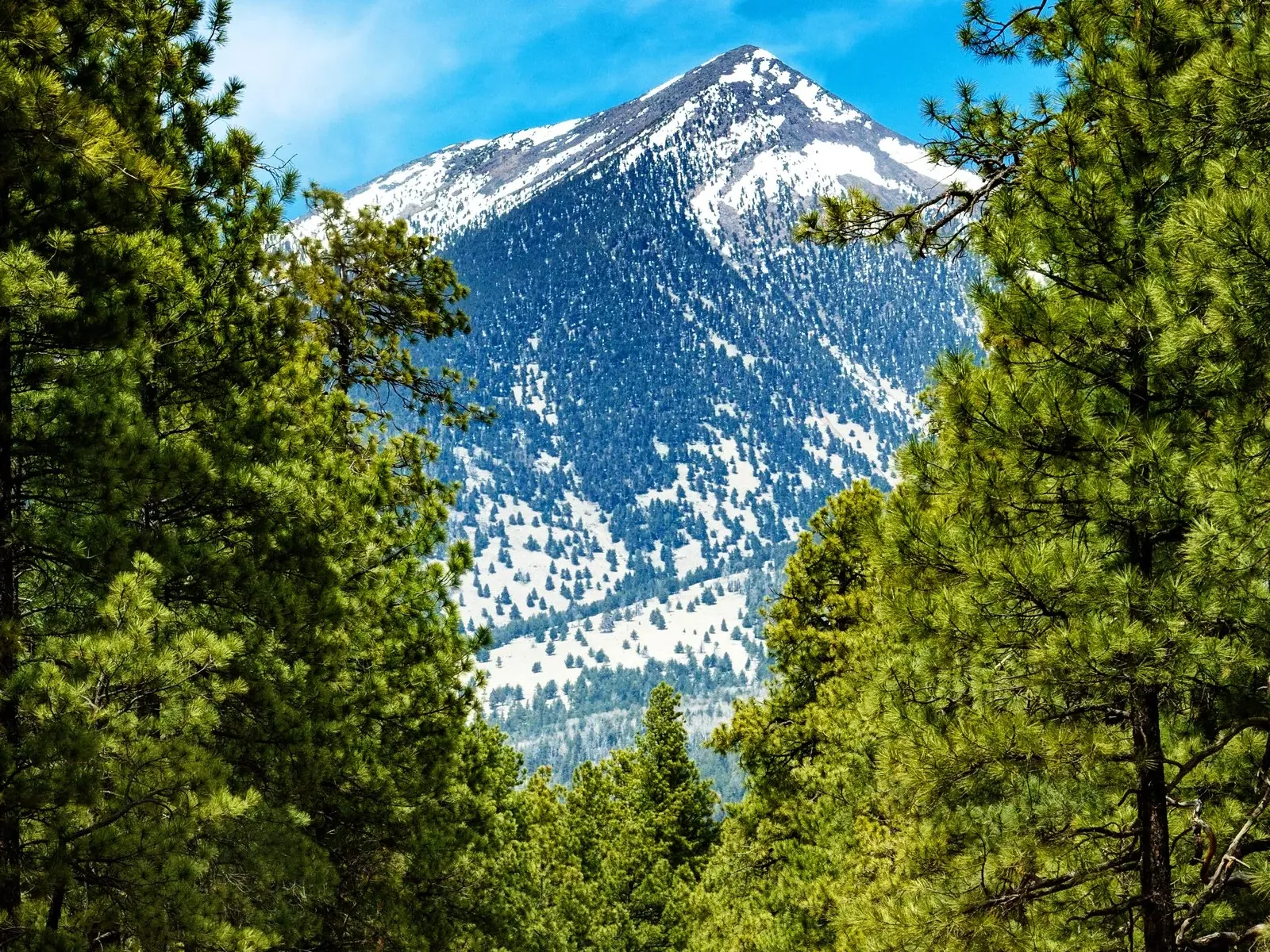
People are often surprised that UV is a concern in a cold mountain town, but at nearly 7,000 feet the sun is intense. Garage doors left open on summer afternoons, south-facing porches and storefronts with large windows all expose coatings to strong ultraviolet light. Polyaspartic topcoats keep their color where standard epoxies would not.
Winter brings the other side: cold slabs, short days and frequent storms. Fast cure lets us complete projects in a narrower weather window, and the finished surface stands up to slush, deicers and cinders. For outdoor surfaces we watch the forecast closely and avoid days when moisture could reach the coating before it sets.
Fast does not mean rushed
Polyaspartic coatings are fast, but good preparation is not. A quality install still means full diamond grinding, repair of scaling and cracks, and moisture testing. Quotes that promise a one-day floor by skipping those steps tend to produce floors that peel within a few winters.
The short working time also demands an organized crew: correct mix ratios, small batches, steady application and a wet edge. That is the experience you are paying for.
Care and long-term upkeep
Polyaspartic floors need little care. Squeegee meltwater out in winter, sweep cinders regularly and wash with a neutral cleaner now and then. Avoid harsh solvents. If a high-traffic lane dulls after several years, a light abrasion and fresh topcoat restores it quickly.
Is polyaspartic the right choice for your floor?
Polyaspartic makes the most sense when timing matters, when sunlight reaches the floor, or when temperatures are on the cool side. That describes a lot of Flagstaff projects: fall garages, porch floors, shop floors that need to be back in use quickly and commercial spaces that can only close briefly.
It is less suited to floors that need a thick, self-leveling build to hide significant unevenness, where epoxy base layers do better, and to metallic decorative work, which needs the longer working time of epoxy. A damp slab is a problem for any coating and needs moisture treatment first. We will tell you which system fits rather than recommending the same one for every floor.