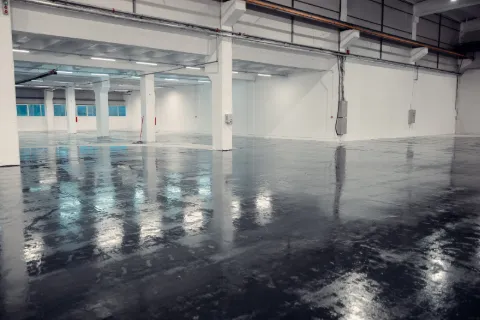
Look closely at most uncoated garage floors in Flagstaff and you will see the same pattern. The concrete near the door and under where the cars park is rough and pitted, sometimes with thin flakes lifting away. There may be white rings where puddles dried, and a fine layer of grit that never quite sweeps up. None of that is the slab being poorly made. It is what happens when concrete spends winter soaking up meltwater and deicer and then freezing.
A garage coating breaks that cycle. It seals the surface so water cannot get in, gives you a floor that can be squeegeed and mopped, and makes the garage feel like a finished part of the home. This page explains how we approach garages here, from repairing existing damage to choosing systems that cope with cold slabs and cinders.
What winter does to an uncoated garage slab
Concrete is porous. When slush melts off a car, the water soaks into the top layer of the slab. Overnight, especially in an unheated garage, that water freezes and expands. Over dozens of freeze-thaw cycles each winter, the expansion breaks the surface apart a little at a time. That is called scaling, and it is why so many local garages have rough patches and small craters.
Deicers make it worse. Salts and chloride-based products lower the freezing point of water but also increase the pressure inside the concrete as it freezes and dries. Road cinders add abrasion, grinding into the softened surface every time a tire rolls over them.
Coating a slab like this is not just a cosmetic upgrade. Sealing the surface keeps water and salts out of the concrete, which slows or stops the damage entirely.
Repairing the slab before it is coated
Coating over scaled concrete without fixing it first is one of the most common reasons garage floors fail in town. The loose, weakened material at the surface simply lets go, taking the coating with it.
Our process starts by grinding the slab with diamond tooling until we reach sound concrete. Shallow scaling usually grinds out. Deeper pits and spalls get filled with a repair mortar or resin patch, then ground flush. Cracks are opened up and filled, and we decide with you whether to keep control joints visible or fill them.
The result is a flat, solid surface that the base coat can bond into. It is the step people never see in the finished floor, and the step that decides whether it lasts.
Garage systems that suit Flagstaff
Most garages here end up with one of these builds. The right one depends on how damaged the slab is, whether the garage is heated, and the look you want.
Textured flake system
A base coat with a full broadcast of vinyl flakes and a clear, slip-resistant topcoat. Hides cinder scratches and grit, and gives good grip when the floor is wet. Our most common recommendation.
Polyurea base with flake
A flexible base coat that handles the temperature swings of an unheated garage better than rigid epoxy. Good for older or cracked slabs. More on polyurea coatings.
Solid color with grit topcoat
A clean, single-color floor with aggregate in the topcoat for traction. Popular in shops and garages that double as gyms.
Fast-cure cold-season build
A polyaspartic system that cures at lower temperatures, useful for late-fall and winter installs in garages that can be kept above the minimum.
Heated versus unheated garages
Whether your garage is heated changes both the system we recommend and when we can install it.
| Heated garage | Unheated garage | |
|---|---|---|
| Install season | Year-round | Best late spring through early fall; winter with temporary heat |
| Slab movement | Smaller temperature swings | Larger swings; flexible base coats help |
| Meltwater | Melts quickly, dries faster | Can refreeze on the floor; texture matters more |
| Moisture | Usually drier slab | Can hold moisture longer; test before coating |
| Typical system | Epoxy or polyurea base, flake, polyaspartic top | Polyurea base, flake, slip-resistant polyaspartic top |
Benefits you will notice the first winter
Slush becomes easy to handle. Water stays on the surface. Push it out the door with a floor squeegee and the garage dries quickly instead of staying damp for days.
No more salt rings. Deicer residue wipes off rather than leaving white crust and stains.
Less grit in the house. Sealed concrete stops shedding dust, and cinders are easy to sweep up rather than grinding into the floor.
The damage stops spreading. Without water and salt soaking in, scaling and pitting do not keep advancing year after year.
A brighter space. Light flake blends reflect more light, which is welcome on dark winter afternoons when you are loading the car or working at the bench.
Installation, step by step
Inspection and moisture test
We look at scaling, cracks and old coatings, test the slab for moisture and check the garage temperature.
Diamond grinding
Grinders with vacuum dust collection remove damaged concrete, sealers and old paint.
Repairs
Pits, spalls and cracks are filled, then ground flat.
Base coat and flakes
The base coat is applied and flakes are broadcast to full coverage or your chosen density.
Topcoat with texture
Once the flakes are scraped and cleaned, a clear topcoat goes on, usually with fine anti-slip aggregate.
Cure and care briefing
We confirm cure times for the current temperature and go over winter care with you.
Flagstaff-specific details we plan for
Cold slabs. Coatings have minimum application temperatures, and a slab can be much colder than the air above it. We measure slab temperature, not just the thermostat.
Driveway slope and drainage. Many garages here sit at the bottom of sloped driveways, so meltwater runs in. We look at where water collects and can suggest texture at the door or a squeegee path to the drain or threshold.
Altitude sun. A west-facing garage door left open on a July afternoon gets strong UV. UV-stable topcoats keep the floor near the door from discoloring.
Older homes. Concrete in older neighborhoods may have been patched, painted or sealed several times. All of it has to come off before coating.
Why garage coatings are worth leaving to a crew
DIY kits are built for ideal conditions: a sound, dry slab at a comfortable temperature. Flagstaff garages rarely offer that. Scaled concrete needs grinding and repair, cold slabs change how resins cure, and moisture in the slab can push a coating off from underneath.
A professional crew has the grinders, repair materials and experience to handle all of that, and the judgment to tell you when to wait for better conditions. The cost difference shows up a winter or two later, when a kit is peeling and a properly built floor still looks new.
Looking after a coated garage through winter
Keep a floor squeegee by the door and push meltwater out after storms. Sweep up cinders regularly, since they are abrasive. A rubber-backed mat at the house entry catches grit before it reaches your mudroom.
Rinse deicer residue every few weeks in heavy winters, using water and a neutral cleaner. In spring, give the floor a proper wash to remove the season's buildup. If a traffic area dulls after several years, the topcoat can be lightly abraded and renewed in a day.